
International Tax Residence Guide for Founders
An international tax residence guide for founders: assess physical presence, personal ties, treaty claims and Malaysian planning before you relocate.

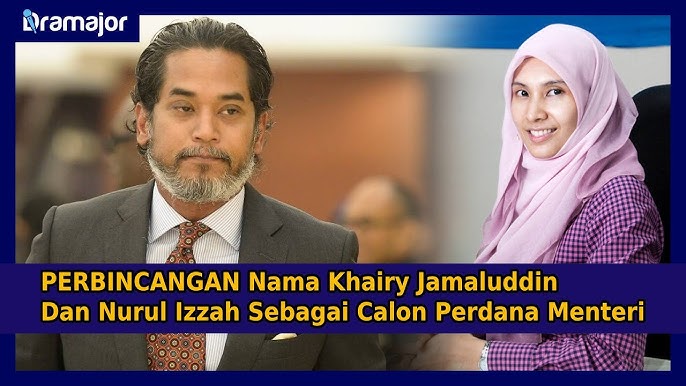
The revelations surrounding the alleged corruption of Prime Minister Anwar Ibrahim’s political secretary, Shamsul Iskandar, have triggered a political earthquake that even seasoned observers did not see coming. The 300-page dossier by businessman Albert Tei — filled with receipts for luxury renovations, cash transfers, premium cigars, tailored suits, and WhatsApp conversations — is not merely a scandal.
It is a referendum on Anwar’s claim to the moral high ground.
Worse still, the public now knows that Rafizi Ramli himself warned the PM multiple times about Shamsul’s behaviour, and Anwar acknowledged the problem — yet took no decisive action. In politics, perception is everything. And the perception now is simple:
Anwar knew. He delayed. And the rot grew.
This is why Malaysians are furious. This is why trust is evaporating. This is why the knives — from inside and outside the coalition — are now out.
But the situation is not beyond rescue. Not yet.
If Anwar is willing to do what no Malaysian prime minister has done before — take radical ownership, commit to irreversible reforms, execute an immediate Cabinet reshuffle, and make a statesman’s exit — he could still transform this disaster into the most extraordinary political reset in Malaysian history.
Below is the proposed roadmap
Let’s be honest: denying that he knew about Shamsul’s misconduct would insult the intelligence of the rakyat. Everyone knows Rafizi warned him. Everyone knows Shamsul was the PM’s own handpicked political secretary. Everyone knows silence equals consent.
Anwar’s first move must be the most painful — but also the most powerful:
Acknowledge that he knew there were issues, acknowledge that he underestimated their seriousness, and acknowledge that his hesitation was a mistake.
But — and this is crucial — he must frame the mistake in a way that Malaysians understand:
“I placed too much priority on political stability. I believed removing my own political secretary at that moment would destabilise a fragile coalition. That was a misjudgment — and I take full responsibility.”
This is leadership. And it will shock the public in a way that earns respect, not scorn.
Anwar will never say : “I protected my cronies.” And he shouldn’t.
But, he should say:
“In the early years of this unity government, our coalition was extremely fragile. I overestimated the political risk of acting too quickly. That was a miscalculation — and I will not repeat it.”
This shifts the narrative away from corruption and toward political misjudgment.
Malaysians can accept miscalculation. They will not accept dishonesty.
Anwar floated the idea months ago. Now he avoids the topic. But the current climate demands it.
A reshuffle serves three critical purposes:
The rakyat sees fresh faces, new leadership, and a willingness to course-correct.
Instead of being a PM who “did nothing,” he becomes a PM who acts decisively.
If Anwar is serious about a political and institutional reset, then he cannot continue governing with half-measures. The window is shrinking, expectations are rising, and the machinery of the old political class is already regrouping. That is why the reshuffle must do more than shuffle chairs — it must signal a new governing philosophy.
The centrepiece of that reset should be Nurul Izzah.
She has the trust of a broad majority of Malaysians — even those who may not support her father. Her reputation for integrity, her emotional intelligence, and her ability to speak to Malaysians across divides make her arguably the only political figure today with the moral authority to unite the country around a reformist agenda. Appointing her as Senator, then Home Minister + Deputy Prime Minister, would give her the executive platform she needs to drive the reforms the country has been promised for 25 years.
Of course, the opposition will melt down. UMNO ultras will scream nepotism. Mahathir’s faction will probably need smelling salts.
But politically, it works — because the public will judge Nurul on the substance of her reform agenda, not the noise from parties that have run out of ideas.
Yet, to stabilise the political battlefield, the reshuffle must also include a second strategic appointment: Khairy Jamaluddin.
Khairy carries baggage, yes — but he also carries real political capital. Among Malays, he has credibility. Among non-Malays, he is viewed as a pragmatic progressive (with the usual UMNO caveats). But the most important factor is this: appointing Khairy would neutralise UMNO’s rebellion before it even begins. If UMNO or the Mahathir wing attacks him, they risk looking vindictive, petty, and anti-reform — because Khairy is still seen by many as one of the few “reasonable” figures from UMNO’s long and complicated history.
Khairy should also be made a Senator and given a powerful, reform-relevant portfolio — one that allows him to shape policy, implement transparency measures, and prove that he is committed to a new Malaysia rather than reliving the old one. But he must be fully aligned with the reformist plan, not hedging his bets for a future UMNO comeback.
Done correctly, this “Nurul + Khairy” axis would do two things simultaneously:
Galvanise the reformist base — by putting a trusted, principled leader (Nurul) at the helm of the nation’s most sensitive ministry.
Reassure the political middle — by having Khairy inside the government, signalling stability and cross-sectional cooperation.
And when the dust settles, Nurul and Khairy can decide — based on performance, public sentiment, and political conditions — which of them should run as Prime Minister and Deputy Prime Minister in waiting for GE16.
If the reforms are executed boldly between now and GE16, this combination could realistically sweep the election in a landslide, leaving the old morally bankrupt machinery with nothing to offer except nostalgia and recycled fear-mongering.
This will ignite a political nuclear explosion — and that is exactly why Anwar must do it.
Opposition figures (especially the Mahathir wing) will scream “Nepotism! Dynastic politics! Family rule!”
Fine. Let them. Because this decision:
The Home Ministry is the battleground of institutional reform. Let her take charge of it.
No more hiding behind bureaucrats.
If she’s going to be a future PM, let it be through visible, hard work in the most difficult ministry in Malaysia.
If both father and daughter travel nationwide explaining to the Malays:
why institutional reform matters
why the swamp must be drained
why good governance must outlive the current political class
why the Home Ministry must be rebuilt from the ground up
why continuity of reform requires a successor who understands the mission
— The Malays will understand.
And the meltdown from his enemies will only prove one thing:
They fear Nurul because they fear real reform.
This is the single move that disarms all political rivals.
By declaring that:
he will complete his term,
not contest GE16,
and retire gracefully,
Anwar rewrites the script entirely.
Why it works:
It eliminates the incentive.
And Malaysians love statesmen.
A retiring PM is the most dangerous kind of reformer.
No rushing. No chaos. No speculation.
This is legacy management at the highest level.
These reforms are essential and they will outlast any scandal and define Anwar’s place in history. Here is a preliminary list:
Self-explanatory, popular, uncontroversial.
Break the cartel. Bring in new blood.
Real declarations — not “MACC has seen it privately.”
The heart of Reformasi.
No loopholes. Automatic seat vacation.
Every sen must be traceable.
Key changes:
Not contracts, not tenders, not approvals, not “sensitive memos.”
Zero grey areas.
Civil servants and ministers included.
Because the moment the bill goes to Parliament, any MP who votes against transparency immediately signals:
“I have something to hide.”
And once the rakyat sees the list of MPs who vote NO…
the MACC has a clean, legitimate reason to open investigations into every single one of them.
OSA reform is the ultimate pressure cooker. It exposes the corrupt automatically. It forces political alignment around transparency.
And it cements Anwar as the PM who finally dismantled Malaysia’s 40-year wall of secrecy.
Anwar must deliver a short, humble, decisive address:
“I hesitated when I should have acted. That was my mistake. I will not contest the next general election. My final mission is to deliver reforms that no future prime minister can reverse. Malaysia deserves institutions stronger than individuals — including me”.
“I will restore trust. I will implement change. And I will leave behind a cleaner, stronger nation.”
This would be the most powerful speech of his career, if crafted well.
With no need to campaign for re-election, Anwar, fronyed by Nurul, can:
✔ Clean up procurement
✔ Reform GLC governance
✔ Fix enforcement agencies
✔ Improve investor confidence
✔ Establish succession planning
✔ Protect Nurul from internal sabotage
✔ Deliver the most sweeping political reforms in Malaysian history
This is the final chapter. But it can still be the most meaningful.
This scandal could be the final nail in Anwar’s reformist coffin — or the spark that forces him into the greatest transformation of his political life.
If he:
owns his misjudgement
reshuffles the Cabinet
elevates Nurul & Khairy with confidence
passes the Madani Legacy Reforms
dismantles the OSA
commits to retiring after GE16
— he will reshape Malaysia for generations.
This is no longer about defending Anwar. It is about redeeming the idea of Reformasi itself. And if he dares walk this path, then history will record not the scandal — but the redemption.
The final test has arrived. Will Anwar have the courage?
An international tax residence guide for founders: assess physical presence, personal ties, treaty claims and Malaysian planning before you relocate.

Labuan Company vs Malaysian Sdn Bhd: Which Structure Fits an International Entrepreneur? By: Damian Fernandez © 21st Sept. 2026 For an international entrepreneur looking at

Build an asset protection company structure for ASEAN growth, cross-border banking, privacy and compliant long-term mobility in Malaysia with confidence.

Labuan substance rules determine whether your company can retain its tax position. See what genuine activity, staffing and records require on site now.

Offshore banking versus fintech: compare control, compliance, access and resilience when structuring your business for ASEAN growth and global mobility.

Learn how to outsource ASEAN payroll remotely with compliant local processes, dependable reporting and a structure built for regional growth at scale.

Malaysian subsidiary versus branch: compare liability, tax, banking, licensing and mobility factors before choosing your ASEAN market-entry vehicle now.

Compare the best ASEAN business hubs for market access, banking, talent and residency, then choose a base that supports lasting regional growth today.

Business migration to Malaysia can create an ASEAN base with the right company, visa, banking and compliance plan. Learn where strategy matters early.