By: Damian Fernandez. 10th June 2026.
Reformasi: The Movie We Were Sold.
If Malaysian politics were a film, the run-up to GE15 would have been a box-office smash.
At the centre of it all was Anwar Ibrahim – the long-suffering hero. The man who had been cast, time and again, as the underdog. The reformer. The victim of a system stacked against him. The leader who would one day rise from the ashes and finally set things right.
It had all the ingredients of a classic.
Struggle. Betrayal. Imprisonment. Comeback.
And of course, Reformasi – the grand narrative model. Not just a slogan, but a promise of deep, structural change. This was not supposed to be cosmetic politics. No minor adjustments. No tinkering at the edges. This was meant to be the moment everything changed.
And Malaysians, across communities, bought into that story.
Because who doesn’t love a redemption hero? The idea that someone who had suffered, endured and fought against the rigged system would ultimately dismantle that very system was compelling. It felt just. It felt deserved. It felt… cinematic.
In many ways, the campaign messaging leaned into this perfectly. The speeches were emotional. The language was powerful. The themes were clear: justice, reform, accountability, a clean break from the past.
You could almost hear the emotive background music and see tears in the eyes of the Rakyat.
Anwar knew exactly what he was doing. Anwar understood his audience deeply. He took advantage of a cultural dimension to all of this. He knew Malaysians, across communities, have a long-standing affection for grand, emotional storytelling, the kind seen in Bollywood and regional soap operas and cinema: the wronged hero, the moral crusader, the triumphant return against all odds. And he leaned into it masterfully. The speeches, the pulse, the symbolism – it was all calibrated. Anwar could have been the darling of Mollywood; probably outshining Joseph Vijay.
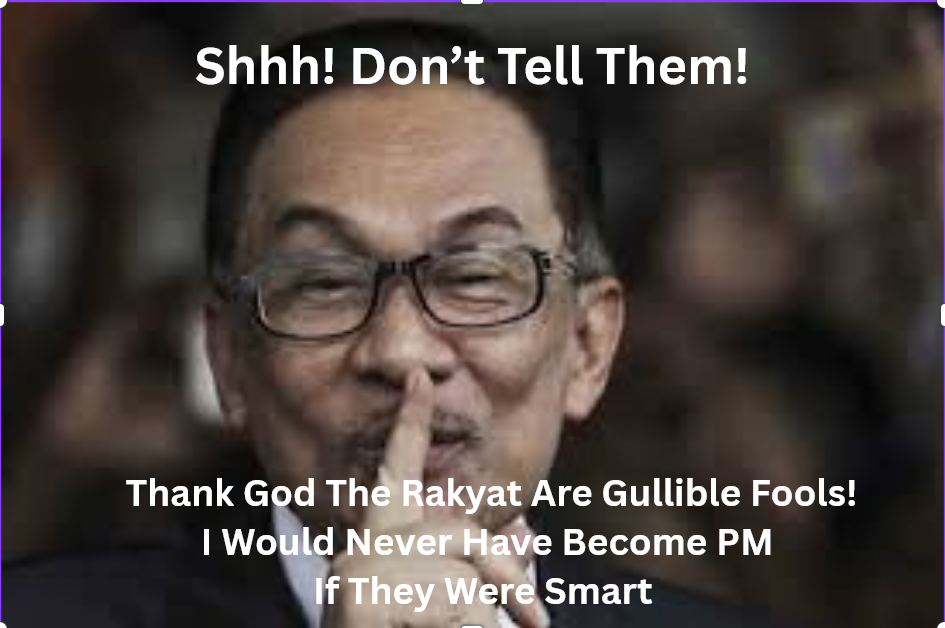
Anwar Deceived The Rakyat Skillfully.
In hindsight, Malaysians need to see the truth, however hard it is. This wasn’t conviction, it was a masterful performance. The absence of real Reformasi should be taken as something more deliberate. Not only was there no serious push to dismantle entrenched systems – there appears to have been a preference to preserve them. Reformasi was not just deferred; it was quietly sidelined. And in doing so, the very structures and narratives that have long defined Malaysia’s political landscape have NOT been challenged, but further embedded.
But now that the credits have rolled on GE15, and the “sequel” is playing out in real time, the reviews sound like funeral rites. Because somewhere between the campaign trail and Putrajaya, the script appears to have changed.The Reformasi that was promised — bold, structural, uncompromising — has been noticeably absent. Not delayed. Not partially implemented.
Absent.
Instead, what Malaysians are seeing looks far more familiar. Political compromises that resemble the very system Reformasi was meant to challenge. Appointments and alliances that feel less like reform, and more like continuity.
The question many are now asking is uncomfortable, but unavoidable: Was Reformasi ever the plan — or was it just the pitch? Because in hindsight, much of the campaign messaging now feels less like a roadmap, and more like… theatre.
Vexxed Promises
Take the promises.
Free education up to university level – transformative, ambitious and deeply resonant with younger voters. Quietly shelved.
Abolition of tolls — a long-standing public frustration turned into a campaign pledge. Still very much in place.
PTPTN loan relief — a lifeline for graduates. Now, an aggressive recovery policy has been launched.
An end to political appointments in GLCs – a cornerstone of governance reform. Yet the old patterns persist.
A firm stance against corruption in Cabinet appointments – only to see controversial figures brought into the highest levels of government.
A smaller, more efficient Cabinet – replaced instead with one of the largest in the region.
And perhaps most strikingly, a clear pre-election stance against working with certain political parties… followed by precisely that arrangement post-election. It is now clear – Anwar Ibrahim wanted UMNO in particular, in the fold. He had hoped to somehow take control of the party that he had spent most of his political career in – a romance that he wanted to rekindle. But, instead, Zahid Hamidi made Anwar his floozy.
Now, to be fair, governance is not cinema. Coalitions require compromise. Reality is messy. Decisions are constrained by numbers, negotiations, and necessity. But even within those constraints, direction matters.
And right now, many Malaysians realize that Anwar’s direction is not reform – it is preservation. That the system was not challenged, but absorbed. That the promised disruption has instead become accommodation. This is where the sense of disappointment deepens into something else.
Not anger, necessarily. Not even outrage.
But a feeling of having been… betrayed. Because the narrative was powerful. The symbolism was effective. The timing was perfect.
And it worked. Malaysians, as gullible as they are, fell for the scam.
Anwar Shattered the Idea of Reformasi – With A Condescending Smirk.
The rakyat voted for a story. For an idea. For the belief that this time, it would be different. “Ini Kali Lah!” rang across the nation inspiring Malaysians from all walks of life. Today, that belief has collapsed. Perhaps the most ironic outcome of all this is that Reformasi – once a rallying cry for change – is now being used by critics as a benchmark for what has not been done.
The slogan remains. The substance is what’s in question. And in politics, that gap matters. Because voters may forgive delays. They may tolerate compromise. They may even accept partial delivery.
But what they struggle with is variance – the gap between what was promised and what is actually happening. That is where trust begins to erode. Looking ahead, the implications are significant. The upcoming state elections are not just about local governance. They are becoming, in many ways, a referendum on credibility and a crystall ball for GE16.
The story that Anwar sold no longer holds. What will Anwar promise next? Will the Rakyat buy whatever he will try and sell?
If there is one lesson from all of this, it is this:
The Rakyat may enjoy a good story. But they expect a better ending.