
Netanyahu to Trump: FAFO. Now What?
Israel is openly defying a U.S.-backed deal and daring Washington to respond – forcing Trump into a brutal choice between playing quiet hardball or accepting defeat and public humiliation.
By: Damian Fernandez. 21st June 2026
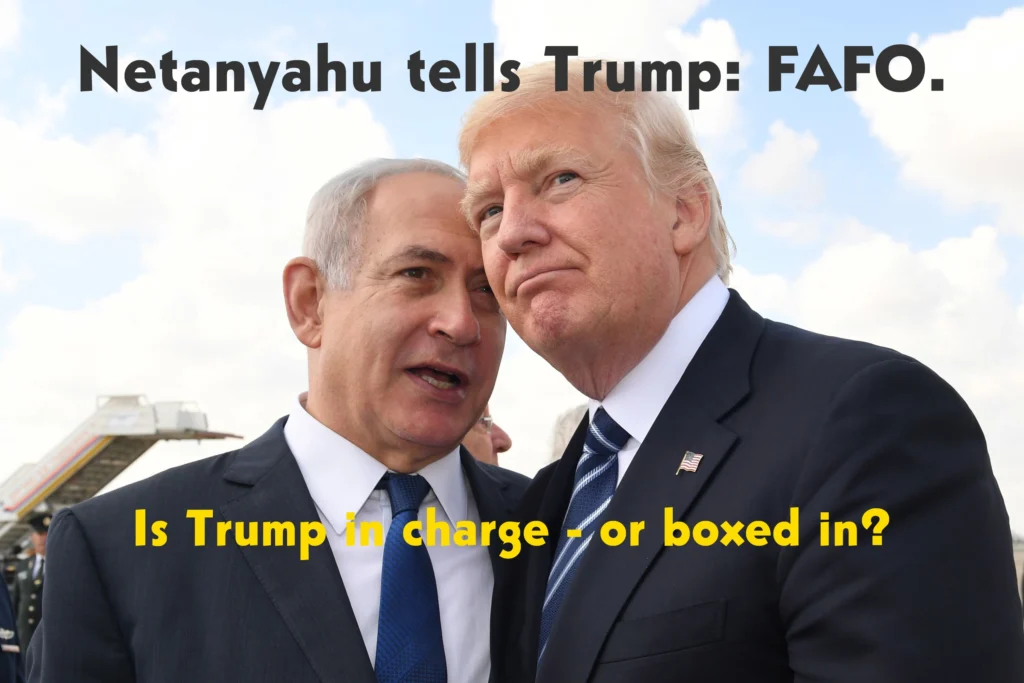
In the aftermath of a brutal 100+ day regional war, the United States and Iran signed an interim Memorandum of Understanding around June 17-19, 2026. Yet within hours of its signing, the framework began unravelling; because Israel, under Benjamin Netanyahu’s right-wing coalition, openly defied its terms. This is Netanyahu’s FAFO moment to Trump. It highlights a stark truth: Netanyahu is forcing President Trump into a difficult choice about America’s relationship with its closest ally and he is banking on Trump backing down.
The MoU explicitly called for an immediate ceasefire on “all fronts”, including Lebanon. Israel rejected an agreement it had no hand in shaping. Netanyahu and hardliners like Itamar Ben-Gvir and Bezalel Smotrich declared that Israeli forces would remain in southern Lebanon security zones “as long as necessary.” Within 24-48 hours, Israeli strikes intensified in areas such as Nabatiyeh and the Bekaa Valley. Hezbollah retaliated. Planned technical talks in Switzerland were postponed as Iran cited violations and demanded enforcement. A last-minute Qatar-mediated Israel-Hezbollah ceasefire was announced, but the damage to trust was done. The broader US-Iran diplomatic opening now teeters on the edge.
This outcome was foreseeable. Netanyahu’s coalition has treated the interim deal as a replay of the flawed 2015 JCPOA: premature relief for Iran without dismantling its nuclear infrastructure or proxy threats. Israel’s leaders have made clear they will pursue their security priorities regardless of Washington’s timeline or broader strategic needs.
Lebanon: The Breaking Point
The MoU’s vagueness on Lebanon proved its Achilles’ heel. While calling for de-escalation and sovereignty, it offered no binding withdrawal schedule or robust enforcement. Israel maintained its operational freedom; Iran and Hezbollah demanded full Israeli exit. Trump’s suggestion that Syria handle Hezbollah was brushed aside. The result was renewed violence that directly sabotaged US diplomatic efforts.
For Trump, who campaigned on ending endless wars and delivering deals, this presents a profound challenge. Continued Israeli defiance undermines American leverage, risks renewed closure of the Strait of Hormuz, and threatens economic stability. At some point, patience with an ally that repeatedly complicates US priorities must have limits.
The ICC Option and Strategic Isolation
Trump’s best path forward may require a decisive break from unconditional support – quietly. The International Criminal Court has already issued an arrest warrant for Netanyahu (November 2024) on charges related to Gaza operations, with reported prosecutor efforts targeting hardliners like Ben-Gvir and Smotrich for settlement policies and incitement. While the US has historically shielded Israel and even sanctioned the ICC to protect allies, Trump could recalibrate. But that recalibration must be handled behind the scenes.
Quietly allowing or facilitating accountability – by not obstructing ICC processes or signaling reduced protection – would send an unmistakable message that America will not underwrite actions that harm its own interests. Pairing this with measured diplomatic isolation – encouraging European partners to expand travel bans and targeted sanctions on key Israeli figures, stepping back from automatic UN shielding, and conditioning future aid packages – could bring Jerusalem into line without full rupture.
For Trump, the political calculus is tougher than it appears. Although global criticism of Israel has grown and overall U.S. public sympathy has declined – especially among Democrats and younger voters – Republican and evangelical support for Israel remains strong within Trump’s base. Moves such as conditioning aid, reducing diplomatic shielding, encouraging European sanctions on Netanyahu, Ben-Gvir, and Smotrich, or accommodating ICC processes would likely be seen as betrayal by his core supporters. Far from boosting his standing ahead of the 2026 midterms, such actions risk depressing turnout among national-security conservatives and pro-Israel Republicans.
True “America First” realism calls for transactional pressure, not blanket loyalty. Targeted, behind-the-scenes leverage to enforce the MoU and restrain Israeli operations in Lebanon could advance U.S. interests. However, a visible campaign of isolation or ICC facilitation would probably earn only modest international applause while imposing high domestic political costs. Trump must weigh whether enforcing discipline on a defiant ally strengthens his hand or fractures his coalition at a critical moment.
No Winners, Mounting Costs
The 60-day window was meant to tackle core issues – highly enriched uranium, verification, proxies. Instead, it is being wasted on damage control. If Israel’s actions continue to torpedo progress, Trump faces a binary choice: double down on unconditional backing that empowers hardliners, or use America’s considerable leverage (quietly) (aid, arms, diplomacy) to enforce accountability.
This is not routine alliance friction; it is a structural clash that risks broader relapse into conflict. Trump has a rare opportunity to reset the terms of the relationship on realistic grounds – that even the closest partnerships have boundaries. Prioritizing enforcement of the MoU, supporting ICC accountability for Netanyahu and key coalition figures, and applying selective isolation may be the tough but necessary medicine. The alternative – watching American strategic gains evaporate in service of an ally’s unchecked agenda – serves neither US interests nor long-term regional stability.
The coming days will test whether Trump is willing to make the hard call.